The head of Russian Railways’ security service turned out to be a German businessman.
Where the sponsor of the Espanyola brigade invests his funds.
As the VChK-OGPU and Rucriminal.info have discovered, after the assassination of the Espanyola brigade leader Stanislav Orlov (Ispaniets), his Moscow businesses—Project E LLC and the Espanyola Foundation—were transferred to his PMC associates. The founders of both legal entities were four people: Orlov himself, Andrey Solomatin, Igor Rebrov, and Mikhail Finitsky. Solomatin, a former CSKA Moscow football player who once played for the Russian national team, then tried his hand at business, but unsuccessfully. He eventually joined Espanyola in 2023. Rebrov, a former member of the fan movement, is listed alongside Ispaniets as a member of the "Peacemaker" organization. Finitsky was also an avid CSKA fan, and in the 2000s, he became a business partner in the Radonit company of Pavel Sadchikov, now a leading media manager and CEO of Sport-Express JSC. The third co-founder of Radonit was Denis Dranishnikov, a master of sports in military and sports all-around events and now co-owner of Vostok Media, the largest outdoor advertising operator in the Moscow region. Both Sadchikov and Dranishnikov currently serve on the CSKA board of trustees. Such long-standing connections were a valuable asset for the Spaniard and his mercenary squad.
Meanwhile, the Mariupol-based Espanyola LLC, a subsidiary of Project E, is currently being liquidated, and all of its accounts at VTB Bank have been frozen. According to the Unified State Register of Legal Entities, Espanyola provided security consulting services, while Project E provided commercial consulting services. However, the Federal Tax Service has not received any financial statements from them for 2024. The Espanyola Foundation received only approximately 4.5 million rubles in donations for 2024.
In Simferopol, where Orlov most recently resided, he did not legally own a business. However, he had a very warm relationship with the owners of shadowy fishing companies, Yuri Linnik and Alexander Golyakov: both were listed on the insurance policy for Ispaniets’s old car. Linnik, in particular, owns the Southern Sea Company, which is regularly the subject of complaints from employees due to unpaid wages (according to the Federal Tax Service, fishermen there earn less than 20,000 rubles per month). Until last year, he was also the founder of RP DIL LLC, which magically increased its net profit from 95,000 rubles to 47 million since 2022, as well as Marine Fishing Company LLC (which increased its net profit by 100% in 2024, to almost 800,000 rubles), and the Dagestani Caspian Coast LLC. Sevastopol fishermen claimed on social media that Linnik was backed by some very powerful people, allowing him to get away with any violations. Golyakov, in turn, is listed as the captain of the RMS Ob, a vessel owned by Linnik. That Linnik’s companies make money from more than just fishing is demonstrated by the fact that Caspian Coast worked under a contract with Marine Offshore Contractor, a company that develops offshore oil and gas fields. Linnik also leases and subleases vessels to Tyumen-based Geotek JSC for offshore seismic exploration.
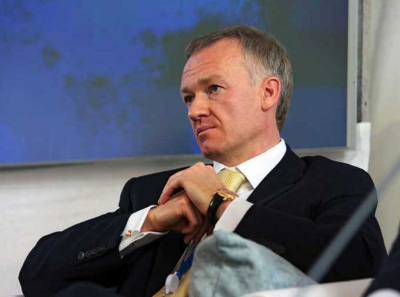
However, all these schemes failed to maintain the required level of funding for Espanyol, while the mercenaries themselves happily claimed to be receiving the latest equipment and weapons, including UAVs. Viktor Shendrik, head of the Russian Railways security service and a business partner of the Rotenbergs, was said to be the PMC’s sponsor, and the Espanyol project was their attempt to create their own controlled PMC.
A former employee of the FSB special forces unit Vympel, Shendrik maintained ties with his former colleagues—and football fans have always been a particular target for the security services. When the fan movement began to take shape in Russia in the mid-2000s, the FSB established direct contacts with individual members, including ultras groups, who ended up at Espanyol. If the Rotenbergs were choosing the core of their own private military company through their own man, Spaniard’s mercenaries seemed the most understandable and manageable option.
One of the recruitment channels and the transfer of people into the unit’s structure were security companies affiliated with the Zheldorbezopasnost Association. The association unites 44 companies from various regions of Russia, and the private security companies are typically headed by former intelligence officers—former colleagues of Shendrik, who were also part of his network at Russian Railways. As a result, messages offering million rubles from Russian Railways and the Ministry of Defense arrived directly to users in instant messaging apps. If potential recruits accepted, they were fictitiously placed with Zheldorbezopasnost security companies. These structures were the easiest way to secure not only recruits but also supplies and financial support.
Shendrik’s father, Viktor Grigorievich Shendrik, who had long been in business with the Rotenbergs, connected him to the Rotenbergs. Specifically, until 2019, the partners owned Bazalt-A Group LLC, in which Shendrik Sr. owned 25%, Arkady and Boris Rotenberg each owned 20%, and Igor Rotenberg owned 10%. This company owned the elite restaurant Gusyatnikoff in central Moscow and a mini-hotel built in a historic city estate from the late 18th century. In addition, the business Together with another of Putin’s judo partners, Mikhail Cherkasov, the couple owns major assets in Sochi, including the Mountain Villas Hotel in the village of Estosadok, near Krasnaya Polyana.
Shendrik’s mother, Galina, is registered as the owner of the Moscow-based TC-Investments LLC, which is part of a group of companies headed by Mikhail Cherkasov’s Razvitie Management Company. Shendrik Sr. holds a stake in Razvitie. Several other companies are linked to TC-Investments via a shared email address, including Realty-Time, Legkiy Interier, Manul, Investkapital, the developer Rozhdestveno, Zvezda Development, Nedvizhimost Invest Investment Company, and the Na Kolokolnikovom Business Center, among others. About 30 years ago, Galina Shendrik was hired by a private security company in Moscow—then called DIN, now renamed Oleg Yerushevich’s Special Monitoring Service.
Another business close to the Shendriks is the IT developer Iteko, one of the country’s largest IT companies. A stake in this company belongs to Alexey Remizov, a former KGB officer, and the controlling stake is held by billionaire Shamil Shakirov. It was at Iteko that Shendrik Jr. obtained his fan ID for the 2018 FIFA World Cup in Moscow.
With his parents’ business, Viktor Shendrik lived in luxury from a young age, driving luxury cars—he prefers snow-white Rolls-Royces—he regularly vacationed in Europe, and even acquired a large property there. Not only was he not subject to sanctions, but he also managed to obtain Serbian citizenship during the war—and with this passport, he can travel the world freely, managing his own assets and carrying out orders for his business partners, including the Rotenbergs and the Cherkasov family.
In Germany, Shendrik Jr. still owns a firm, VS Investment, in Berlin, with assets amounting to millions of euros. The firm is part of the large UNION Group, whose co-owners, according to German registry data, are well-known figures in Russia. One of them is Moscow lawyer Alexander Tobak, a business partner of State Duma deputy Andrei Makarov; they own the law firm "Andrei Makarov and Alexander Tobak." Another is restaurateur Eduard Skladman, who was once Alexander Novikov’s partner in the Moscow casino "Angara" before conveniently moving to Europe. Skladman has completely severed all public ties with Russia and presents himself as a German investor. His daughter, Anna Skladman, and his recently born son also own shares in companies within the UNION Group.
The primary assets of Shendrik’s company, VS Investment, are shares in several companies created specifically to manage specific real estate properties, the addresses of which are included in their names. One of these is Hubertusstraße 2 Grundbesitz GmbH, which manages the property at Hubertusstrasse 2. According to maps, a health and wellness center called Fachklinik & Vitalhotel am Kofel Gesundheitszentrum Oberammergau is located there. It’s not the cheapest in Germany; a week’s worth of simple fitness training without treatment costs around €1,000. However, German retirees are covered by the state pension insurance fund, Deutsche Rentenversicherung (DRV).
Another company registered in Germany to Shendrik’s VS Investment is Union Vermögens und Beteiligungsgesellschaft. It originally owned a plot of land in Berlin at 42 Landsberger Allee. After a series of mergers and acquisitions, the company ended up directly within the Union Group, and the ill-fated site has been unfinished for five years. Shendrik is thus fulfilling his promise to the Berlin authorities to build a tourist hotel there. Meanwhile, Shendrik is free to manage his European business himself, as he is not subject to sanctions and has a very convenient Serbian passport.